Recent News
 Henry Community Health Breaks Ground on New Surgical Center in KnightstownLivingOctober 6, 2026
 Five Years Later: What I Wish I Had Known About Breast Cancer, Treatment and the Resources Around UsLivingOctober 1, 2026
 Opportunity Zones Bring New Investment Potential to East Central IndianaAboutSeptember 28, 2026
 On the Right Track: Rail Infrastructure Strengthens Wayne County’s Competitive AdvantageAboutSeptember 10, 2026
 Brewing More Than Coffee: Randolph County Entrepreneurs Recognized by the StateCareers, LivingSeptember 8, 2026
News

Five Years Later: What I Wish I Had Known About Breast Cancer, Treatment and the Resources Around Us
For Breast Cancer Awareness Month, one East Central Indiana survivor reflects on diagnosis, treatment, identity and moving forward—and shares resources available to patients and families throughout our region.
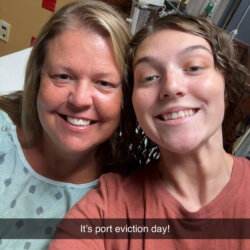
Recently I had my port removed.
I’d been waiting almost five years for that appointment, so I assumed I’d walk out feeling nothing but relief. Instead, I got a little choked up. The port went in because I needed chemotherapy, and not needing my port anymore is good news by any measure. But I never hated it, and I wasn’t crossing days off a calendar. Somewhere along the way it just became part of me, like a lot of things breast cancer left behind.
In the fall of 2021, I went in for a routine mammogram. I didn’t think twice about it. That appointment ended up splitting my life into before and after.
I was diagnosed with triple-negative breast cancer. The next year was chemo, then surgery, then radiation, with a steady stream of appointments, scans, medications and side effects in between. Some of what changed that year went back to normal. Some of it never did.
Why I’m writing this now
October is Breast Cancer Awareness Month, and this one lands differently for me because it’s been five years since my diagnosis. Lately I keep thinking about the women in East Central Indiana who are at the very beginning. One just got the phone call. One is getting ready for her first chemo infusion. One is trying on wigs, or healing from surgery, or just finished treatment and can’t figure out why she doesn’t feel better about it.
What I’d want each of them to know is that there’s a lot more help nearby than I realized when I was in treatment. When you’re first diagnosed, you’re buried in information about your cancer, your treatment plan, your medications and your schedule. You don’t know what to ask yet, because you don’t know what you’re going to need.
So yes, get your mammogram. A routine one is how my cancer was found, and I’ll never stop telling women to talk to their doctors about screening. But this month I also wanted to pass along what I’ve learned and point people toward the resources in our area. If one person reads this and finds something that makes treatment a little easier, it’s worth putting something this personal out there.
What “triple-negative” means
Before my diagnosis I couldn’t have told you what triple-negative breast cancer was. Unless it’s touched your family, you probably can’t either.
Breast cancer isn’t one disease. Doctors test the cancer cells for certain traits that tell them which treatments are likely to work. Triple-negative cancer doesn’t have estrogen or progesterone receptors, and it doesn’t make too much of a protein called HER2. That rules out the hormone therapies and HER2-targeted drugs used for many other breast cancers.
TNBC makes up roughly 10 to 15 percent of breast cancers. It tends to grow faster than many other types and is more likely to come back. Chemotherapy has long been central to treating it, along with surgery and radiation, and depending on the cancer and its stage, some patients now also get immunotherapy or targeted therapies.
That’s a big part of why five years matters to me. It isn’t a guarantee. Cancer pretty much cured me of expecting those. But after years of follow-ups, with the chance of recurrence always sitting somewhere in the back of my mind, getting here and having the port taken out felt like walking through a door. I was excited about it and scared of it at the same time, and I’m still a little of both.
My hair
Of everything chemo did to me, losing my hair was one of the hardest parts. Before cancer, I had long, thick, curly hair. People knew me by it.
I know how that sounds. You’re fighting for your life, and you’re upset about hair? But every time I looked in the mirror, I saw a cancer patient looking back. At a time when I had so little control over what was happening to my body, it was the one change everyone could see.
My hair grew back eventually, but the curls never did. It came in thin and stick straight, and it’s stayed that way. I’ve had to get used to it, the same way I’ve had to get used to a lot of things about myself since cancer.
I don’t think you finish cancer treatment and go back to being who you were. I didn’t, anyway. You bring parts of it with you.
The help I didn’t know about
Looking back, what bothers me most is that there was help available during my treatment that I never knew existed. Organizations all over East Central Indiana cover things you’d never think to bring up with your oncologist: rides to treatment, gas money, wigs and scarves, post-mastectomy bras and prostheses, lymphedema garments, nutritional supplements, medical equipment, money worries, counseling, rehab and life after treatment. Cancer care turns out to be a lot bigger than treating the cancer.
Here’s some of what’s out there in East Central Indiana.
Blackford, Delaware, Henry, Jay and Randolph counties. Little Red Door Cancer Agency has been helping Hoosiers with cancer since 1945, and its services are free to people who qualify based on where they live, household size, income and insurance. Newly diagnosed patients get a care package to take to treatment, and staff can walk you through the healthcare system and connect you with help for insurance, prescriptions, medical bills, rent and utilities, food, clothing and support groups. If getting to chemo or radiation is a problem, Little Red Door can help with rides, gas cards or Uber and Lyft. It also provides lymphedema garments and bandages (fitted by physical therapists), nutritional supplements, incontinence and ostomy supplies, and donated equipment like wheelchairs, walkers, canes and shower chairs.
Through Michelle’s Boutique, Little Red Door provides one free wig per diagnosis, with fittings available at the Muncie office by appointment. Its Door to Wellness program offers free massage, yoga and crafts for patients, survivors and caregivers at its Indianapolis office, along with yoga videos you can do at home. The Muncie office is at 413 S. Tillotson Ave., Unit 3, and can be reached at 765-284-9063. To set up a wig fitting or ask about rides, call the Indianapolis office at 317-925-5595.
Delaware County. IU Health Cancer Center – Muncie is where I was treated. Beyond medical and radiation oncology, it has nurse navigators, social workers, an oncology dietitian, cancer rehab, help finding financial assistance, counseling and cancer health psychology.
Grant County. Cancer Services of Grant County has wigs, hats, scarves, and health care equipment and supplies. Its Perfect Fit Boutique does fittings for breast prostheses and post-mastectomy bras. Its BESS program (Breast Education, Screening & Survival) gives free mammograms to underserved Grant County women who couldn’t otherwise afford them, plus navigation and transportation help when needed. Call 765-664-6815. For treatment, Marion Health Cancer Care offers medical and radiation oncology through an accredited program that covers diagnosis, treatment, recovery and long-term follow-up.
Henry County. Henry Community Health Cancer Care works with IU Health Ball Cancer Center to provide care close to home at Forest Ridge in New Castle. That includes breast cancer care, chemotherapy, radiation, nutrition support during treatment, lymphedema care, and rehab before and after treatment.
Fayette County. The Fayette County Cancer Society helps Fayette County residents with cancer-related costs like wigs, mileage to and from treatment, prescriptions, medical bills, dietary supplements and wheelchairs. Call 765-309-2314. For care closer to home, Reid Health’s oncology office in Connersville is at 2500 N. Park Road. Call 765-935-8773.
Jay County. The Jay County Cancer Society helps residents pay for cancer-related costs insurance won’t cover, like wigs, prosthetics and supplies, and helps with gas money for appointments and treatment. It also runs support groups, sets up post-mastectomy fittings, and hands out mastectomy and lumpectomy kits with a bra or camisole, other recovery items and educational materials.
Fayette County. The Fayette County Cancer Society helps Fayette County residents with cancer-related costs like wigs, mileage to and from treatment, prescriptions, medical bills, dietary supplements and wheelchairs. Call 765-309-2314. For care closer to home, Reid Health’s oncology office in Connersville is at 2500 N. Park Road. Call 765-935-8773.
Rush County. The Rush County Cancer Fund, managed by the Rush County Community Foundation, helps residents facing short-term financial hardship because of a cancer diagnosis. One thing to know: you can’t apply on your own. A church, health care provider, pharmacy or social service agency has to apply for you, so start by asking one of them. Payments go straight to whoever you owe, like a medical provider. Applications are accepted year-round and reviewed monthly. For questions, call the foundation at 765-938-1177.
Wayne County. Reid Health Cancer Center has a Cancer Survivorship Program for when active treatment ends. They’ll help you build a plan for follow-up testing, long-term side effects, work and insurance questions, rehab, nutrition, counseling, and the physical and emotional side of life after cancer. Five years ago I would have skimmed right past that one. Now it’s the one I’d circle.
Living outside a bigger city doesn’t mean you’re on your own. Wherever you live in the East Central region, the statewide and national programs below are open to you, too.
Help anywhere in the region
American Cancer Society in Indiana. Free cancer information and support, help with lodging when treatment means traveling, and the Road To Recovery program, which gives free rides to cancer-related appointments when rides are available. Call 1-800-227-2345.
Susan G. Komen Patient Care Center. Free one-on-one navigation for patients, caregivers and family members, including breast cancer information, emotional support, help getting care and guidance on financial resources. Call 1-877-465-6636 (1-877-GO-KOMEN). Komen also has a financial assistance program for eligible people in active treatment or living with metastatic breast cancer. As of May 2026, it offered a one-time $400 grant, depending on eligibility and funding, that can go toward rent, utilities, food, transportation, child care or medical needs.
Indiana Breast and Cervical Cancer Program. For uninsured or underinsured Hoosiers. Eligible residents diagnosed with breast or cervical cancer may qualify for the Option 3 Treatment Program, which provides Indiana Medicaid coverage during treatment.
IWIN Foundation. IWIN gives grants to Hoosiers in breast cancer treatment to cover the everyday things that get hard when you’re sick, like meals, rides, child or elder care, housekeeping, lawn care, massage therapy, exercise classes and help paying for medication. The grant is paid with gift cards or directly to the service provider. You’re eligible if you’re getting chemotherapy, a mastectomy or radiation, or living with metastatic breast cancer. Applications are available in English and Spanish. Call 317-475-0565.
Indiana Breast Cancer Awareness Trust. The trust behind Indiana’s breast cancer license plate runs a Patient Assistance Fund that gives up to $150 in grocery or gas gift cards. It’s open to Indiana residents in active treatment, such as chemotherapy, immunotherapy, radiation or recovery from reconstruction surgery, whose household income is at or below 350% of the federal poverty level. Funding is limited, so it’s worth applying early.
If you were just diagnosed
If someone newly diagnosed asked me for one piece of practical advice, I’d tell her to ask what’s available, even if she isn’t sure she needs it yet. Here’s what I’d ask, if I were starting over:
- Is there a patient navigator I can call?
- Can I talk to someone about wigs before my hair starts falling out?
- Would physical therapy help after surgery? What should I know about lymphedema, and what symptoms should I watch for?
- Is there an oncology dietitian?
- Is counseling available, both during treatment and after?
- Can someone help me make sense of insurance and medical bills?
- Is there help with rides, gas cards or mileage?
- Where do I get post-mastectomy bras, prostheses or recovery supplies?
- Are there support groups, or exercise and rehab programs?
- What’s available for survivors once treatment ends?
You don’t have to wait until you’re overwhelmed to say yes to help.
When treatment ends
Everyone focuses on getting through treatment, and nobody really warns you that finishing is hard too. During treatment there’s always something next: an infusion, a scan (“scanxiety” is a real thing), surgery, radiation, a follow-up. Then the appointments start to spread out.
The people around you are thrilled, and you are too. You might also be scared. Cancer took up so much room in my life that learning to live without it in the middle of everything has taken a while.
That’s really what the port was about. It wasn’t bothering me, and I didn’t mind that it was there. It was part of the body and the life I had after cancer. Taking it out meant admitting it was time to move on. Not forgetting, and not acting like it never happened. Just moving on.
Five years later
Five years ago I was learning how to live with breast cancer. Now I’m figuring out how to live after it.
I’m grateful for the mammogram that caught it, and for the people who treated me and stuck with me through a year of chemo, surgery and radiation. But this month I keep coming back to the woman who’s just starting. I want her to know there’s help here, for rides and bills, for losing your hair, for the changes surgery leaves behind. There are therapists, navigators, dietitians and support groups, and there are programs for survivors who find out “after cancer” isn’t so simple either. You don’t have to know exactly what you need before you ask.
My hair is different now, and so am I. I used to think moving forward meant getting back to who I was before cancer. Now I think it might mean getting to know, and actually liking, the person who made it through.