Recent News
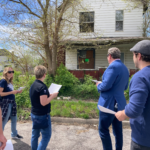 From Vacant Properties to New Possibilities: Land Banks Build Revitalization Momentum Across East Central IndianaLivingNovember 5, 2026
 Livability Spotlight: Forging Bright Futures in East Central IndianaLivingOctober 20, 2026
 Henry Community Health Breaks Ground on New Surgical Center in KnightstownLivingOctober 6, 2026
 Five Years Later: What I Wish I Had Known About Breast Cancer, Treatment and the Resources Around UsLivingOctober 1, 2026
 Opportunity Zones Bring New Investment Potential to East Central IndianaAboutSeptember 28, 2026
News
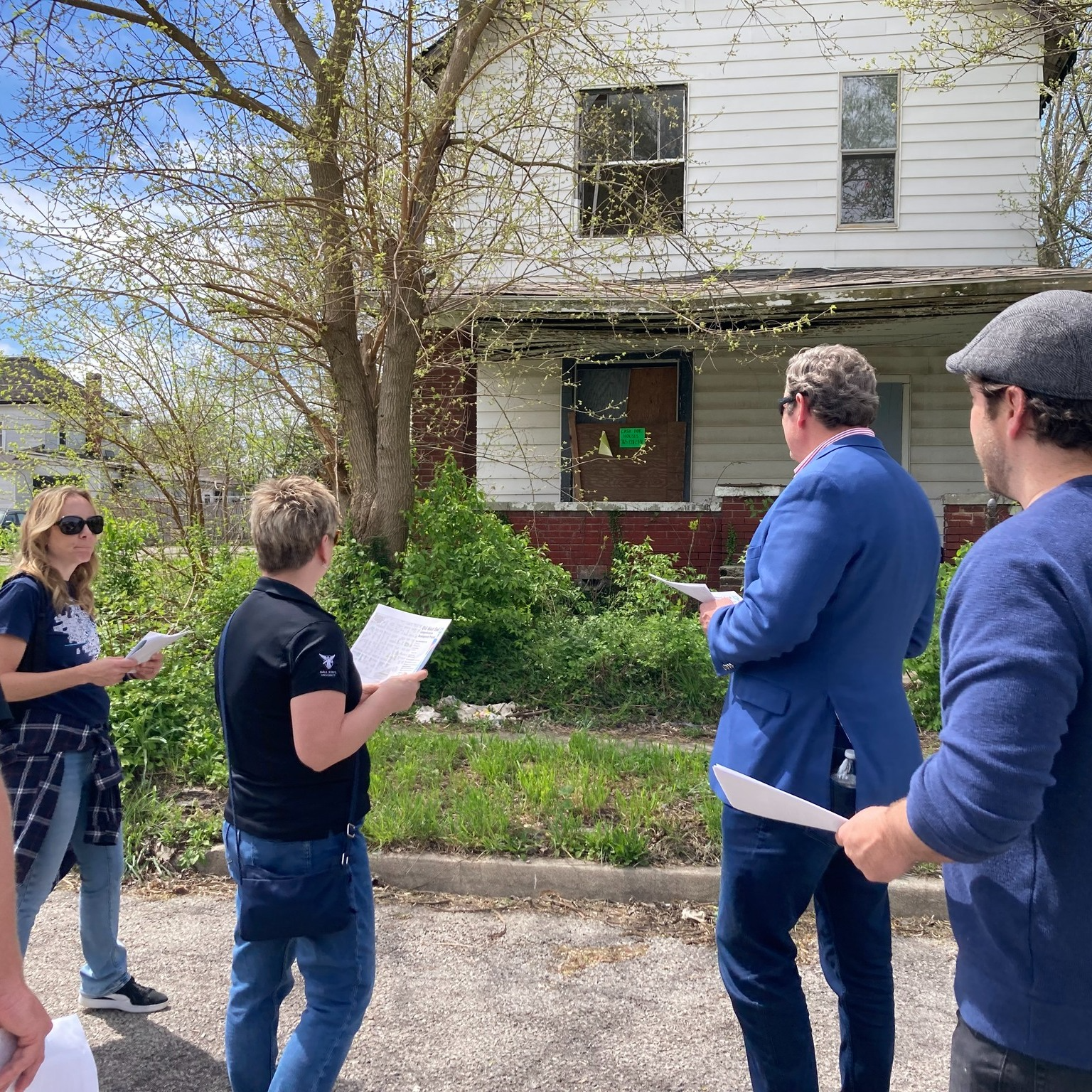
From Vacant Properties to New Possibilities: Land Banks Build Revitalization Momentum Across East Central Indiana
New housing initiatives, historic property rehabilitation and strategic partnerships are helping communities in Muncie, Richmond, Wayne County and New Castle turn long-neglected properties into opportunities for neighborhood investment.
Across East Central Indiana, quality of place isn’t shaped only by what we build next. Sometimes, it starts with taking a fresh look at the properties and spaces that already exist.
In Muncie, Richmond, Wayne County and New Castle, local leaders are using land banks to address vacant, abandoned and underutilized properties that can become barriers to neighborhood investment.
But recent developments show that the work is evolving.
In Muncie, strategic property acquisitions are helping support new housing development and neighborhood revitalization. In Richmond, a newly established countywide land bank is working to preserve and rehabilitate historic homes. And in New Castle, an established land bank provides another tool for returning distressed properties to productive use.
These efforts reflect a growing recognition that addressing vacant properties is about more than removing blight.
It’s about creating housing opportunities, strengthening neighborhoods and making communities more attractive places to live, work and invest.
What Is a Land Bank?
At its simplest, a land bank is a public or nonprofit organization that acquires vacant, abandoned or tax-delinquent properties and works to find a productive future for them.
The important part is what happens between acquisition and resale.
Properties that have been neglected for years often aren’t ready to return to the traditional real estate market. There may be title issues, unpaid taxes, unsafe structures or other challenges that make redevelopment difficult.
A land bank can help address those barriers by acquiring and maintaining properties, clearing title issues, coordinating rehabilitation or demolition, and eventually transferring properties to homeowners or developers with a plan for reuse.
Instead of asking only, “Who will buy this property?” the land bank approach allows communities to ask a bigger question:
“What would be the best outcome for this property and the neighborhood around it?”
That distinction is becoming increasingly important as communities throughout East Central Indiana work to expand housing opportunities while protecting the character and stability of existing neighborhoods.
Muncie: Turning Vacant Properties into Housing Opportunities
Muncie has emerged as an example of how land banking can support a coordinated approach to neighborhood revitalization.
The Muncie Land Bank has spent years acquiring and managing vacant, abandoned and tax-delinquent properties, particularly in neighborhoods that have experienced significant disinvestment.
Today, that work is helping create opportunities for new housing and broader community investment.
During an August 2026 update to the Muncie Redevelopment Commission, land bank representatives reported that the organization had sold 129 properties so far that year and transferred another 22 properties through READI 2.0-related housing efforts.
Those figures demonstrate the scale of activity taking place as the organization works to move properties back into productive use.
A New Chapter for the Old West End
One of Muncie’s most significant initiatives is the redevelopment of the Old West End neighborhood.
Located near downtown, the historic neighborhood has experienced years of vacancy and disinvestment. But through partnerships among the Muncie Land Bank, the City of Muncie, neighborhood stakeholders and development organizations, the area is becoming the focus of a coordinated housing strategy.
The effort is supported by READI 2.0 investment and is expected to help create 34 new homes by the end of 2028.
Rather than approaching each vacant property independently, the initiative brings together multiple parcels and redevelopment partners to support a larger neighborhood vision.
That approach can help address challenges that often prevent individual properties from attracting investment.
It also creates opportunities to combine new construction with rehabilitation, neighborhood improvements and community-driven planning.
Investing in Whitely and Industry
The Muncie Land Bank is also working with partners in the Whitely and Industry neighborhoods, two historically Black communities that have experienced high levels of property vacancy and abandonment.
The initiative involves partnerships with Habitat for Humanity, PathStone Corporation, Urban Light Community Development Corporation, neighborhood organizations and Intend Indiana.
Together, these partners are working to identify priority properties, address barriers to redevelopment and create opportunities for affordable housing and neighborhood reinvestment.
The effort emphasizes the importance of involving residents in decisions about the future of their neighborhoods.
In October 2026, the Muncie Redevelopment Commission approved transferring five additional properties on Kirk Street in Whitely to the land bank after an earlier development arrangement did not move forward.
It’s another example of how land banks can provide flexibility when redevelopment plans change, helping communities maintain a long-term strategy rather than allowing properties to remain in limbo.
For Muncie, the work is increasingly about more than acquiring vacant parcels.
It’s about assembling the partnerships, resources and properties necessary to support lasting neighborhood change.
Richmond and Wayne County: Preserving Historic Homes and Expanding Housing Opportunities
In Wayne County, 2026 has brought significant progress toward establishing a new countywide land bank.
In March and April, Wayne County and the City of Richmond approved an interlocal agreement creating the organization, with both governments committing financial support.
The land bank subsequently established a seven-member governing board, with Richmond Mayor Ron Oler serving as chair.
The Economic Development Corporation of Wayne County has played an important role in coordinating the initiative, working with local government leaders and Intend Indiana to establish a structure for acquiring, stabilizing and rehabilitating distressed residential properties.
The goal is straightforward: help properties that have struggled in the traditional market become viable housing opportunities again.
A Focus on Richmond’s Historic Starr Neighborhood
One of the land bank’s first major initiatives focuses on Richmond’s Starr Historic District.
Known for its historic homes and architectural character, the neighborhood has also faced challenges associated with vacant and deteriorating properties.
The land bank’s initial strategy involves acquiring 16 properties containing a total of 22 housing units.
The Economic Development Corporation of Wayne County purchased the first three properties while the land bank was being established. Plans announced in September called for the acquisition of seven additional homes, followed by six more in 2027.
The approach is designed to stabilize properties and identify qualified developers who can rehabilitate them for future residential use.
Rather than allowing historic structures to continue deteriorating, the initiative seeks to preserve existing housing while helping increase opportunities for homeownership.
The project also demonstrates how historic preservation and housing development can support one another.
Restoring a home can help protect the character of a neighborhood, preserve an existing community asset and create another housing opportunity without requiring an entirely new subdivision.
New Funding and Growing Developer Interest
The Wayne County effort received another encouraging update in October 2026.
The Economic Development Corporation of Wayne County reported that the land bank had received an additional $18,750 grant to support the acquisition of vacant parcels, including $15,000 from the Federal Home Loan Bank and $3,750 from Wayne Bank.
Even more encouraging, ten developers had submitted applications expressing interest in rehabilitating historic homes in the Starr neighborhood.
Those applications were under review at the time of the announcement.
The combination of funding, property acquisition and developer interest is an important step toward turning the land bank’s initial vision into completed rehabilitation projects.
The effort has also received support through READI 2.0, with additional financial commitments from Wayne County, the City of Richmond, the Economic Development Corporation of Wayne County and Cambridge City.
This collaborative approach reflects an understanding that housing challenges extend beyond municipal boundaries.
By working together, communities can create a more coordinated strategy for addressing properties that have remained vacant or underutilized for years.
New Castle: An Established Tool for Neighborhood Revitalization
New Castle has also recognized the value of land banking as part of its approach to neighborhood improvement and redevelopment.
The New Castle Land Bank was established through local action to help the city acquire, manage and return distressed properties to productive use.
Its mission includes addressing tax-delinquent, vacant and deteriorating properties that might otherwise continue to contribute to neighborhood blight.
The city has also worked with Henry County to obtain interests in properties that did not sell through the tax sale process, creating opportunities for rehabilitation or transfer to responsible owners.
Depending on the condition of a property, the land bank approach can support rehabilitation, removal of unsafe structures or preparation of sites for future development.
That flexibility is especially valuable in communities with older housing stock and properties that have experienced years of neglect.
New Castle’s experience also illustrates how land banking fits within a broader economic development strategy.
As Henry County continues working to expand housing choices and attract investment, addressing distressed properties in existing neighborhoods remains an important complement to new residential development.
New housing construction creates opportunities for growth, while rehabilitation and reuse can help strengthen the neighborhoods and housing stock communities already have.
Both approaches contribute to a more complete housing strategy.
Why Land Banks Matter to Housing Development
Housing has become one of the most significant economic development challenges facing communities throughout Indiana.
Employers need workers, families need affordable and appropriate housing choices, and communities need opportunities to attract and retain residents.
But building new subdivisions isn’t the only way to address housing needs.
Existing neighborhoods often contain vacant houses, abandoned structures and underutilized lots that could become part of the solution.
The challenge is that these properties may face barriers that make private redevelopment difficult.
Land banks help communities address those barriers in a more coordinated way.
A deteriorating home may become an opportunity for rehabilitation. A vacant lot may provide space for new construction. Several adjoining properties may create a site suitable for a larger redevelopment project.
And when those properties return to productive use, the benefits can extend beyond the individual parcel.
Reinvestment can improve neighborhood appearance, encourage nearby property owners to make improvements and create opportunities for additional private investment.
It can also help communities make better use of existing streets, utilities and public infrastructure.
For communities seeking to expand housing without overlooking their established neighborhoods, that represents an important opportunity.
Different Communities, Shared Goals
Muncie, Richmond, Wayne County and New Castle aren’t taking identical approaches to land banking, and they don’t need to.
Each community has its own housing stock, development challenges, neighborhood priorities and available resources.
Muncie is using strategic property acquisition and partnerships to support larger neighborhood redevelopment initiatives.
Richmond and Wayne County are building a countywide organization with an initial focus on rehabilitating historic residential properties.
New Castle has established a mechanism for addressing distressed properties and returning them to productive use.
What these communities share is a willingness to look beyond short-term solutions.
They recognize that vacant and abandoned properties are not simply isolated problems. They can influence housing availability, neighborhood stability, public investment and long-term economic competitiveness.
And they recognize that making progress often requires collaboration among local governments, nonprofit organizations, neighborhood residents, developers and economic development partners.
That collaborative approach is central to the larger revitalization story unfolding across East Central Indiana.
Turning Vacant Spaces Into Places of Purpose
At Forge ECI, we know that quality of place and economic development are closely connected.
People and businesses want to invest in communities that demonstrate they are investing in themselves.
Land banks are one of the tools helping East Central Indiana communities do exactly that.
The work underway in Muncie, Richmond, Wayne County and New Castle shows how communities can take properties that have long represented a challenge and begin seeing them instead as opportunities.
And as recent developments demonstrate, those opportunities are becoming increasingly tangible.
Properties are being acquired and transferred. Housing redevelopment plans are moving forward. Developers are expressing interest. New funding and partnerships are helping communities address obstacles that have existed for years.
These efforts may not always generate the attention associated with a major industrial expansion or new commercial development.
But their impact can be just as meaningful to the families and neighborhoods they serve.
Because sometimes moving a community forward isn’t about starting with something new.
Sometimes, it’s about giving what is already there a new purpose.
Sources and Additional Reading
- Muncie Land Bank — Neighborhood redevelopment initiatives, strategic planning and property programs.
- Muncie Land Bank: Whitely and Industry Revitalization — Community-led revitalization and housing partnerships.
- Muncie Redevelopment Commission, August 20, 2026 — Property activity and Old West End housing updates.
- Western Wayne News: Richmond Mayor to Chair Land Bank — Wayne County land bank governance and Starr neighborhood plans.
- Western Wayne News: Closing Nears on Seven More Historic Homes — September 2026 property acquisition update.
- Western Wayne News: EDC Receives Exciting Apartment Update — October 2026 land bank funding and developer interest.
- City of New Castle: Land Bank Establishing Ordinance — The organization’s purpose and authority.